
Why Cotton Bedding Is Worth It: Benefits for Sleep, Skin, and the Environment
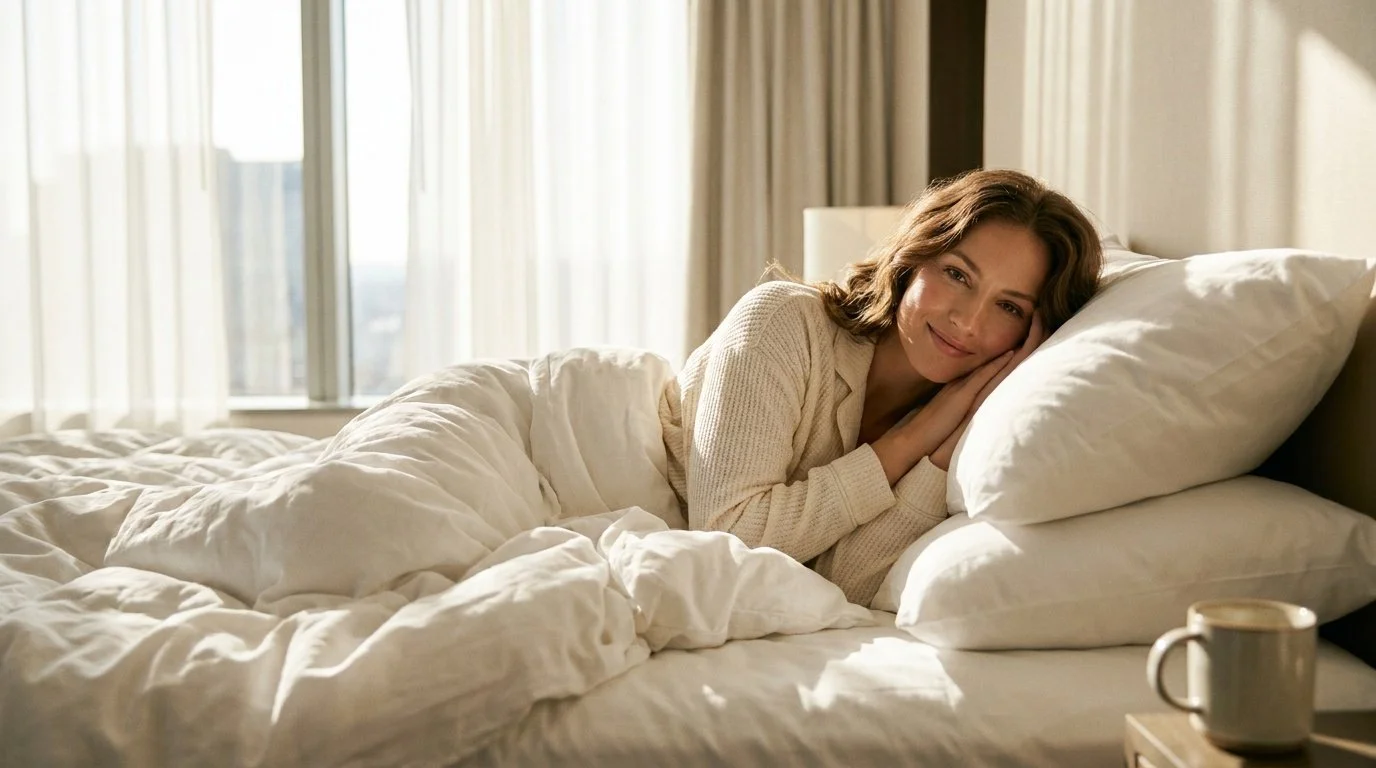
If you're trying to create a healthier, more comfortable bedroom, cotton bedding is one of the easiest upgrades you can make. Cotton has been a go-to fabric for sheets, duvet covers, and pillowcases for generations — and the best reasons to choose it go way beyond aesthetics.
From the evidence, cotton checks the boxes that matter most at night: it's generally safe for sensitive skin, it handles moisture and heat well, and as a natural, renewable, biodegradable fiber, it's a more planet-friendly choice than you might think. SourceSource
Quick Start: Top Cotton Bedding Picks
Need a fast answer? Here are the best cotton bedding picks, verified for 100% cotton construction and credible certifications:
Best Overall Sheet Sets
LANE LINEN 100% Organic Cotton Percale Queen Sheet Set — GOTS certified organic cotton, crisp & cooling percale
Soft Natural 100% Cotton Sateen Queen Sheet Set — Good Housekeeping Seal, light & breathable for hot sleepers
Best Organic Duvet Covers
Bedsure PureWoven 100% Organic Cotton Queen Duvet Cover Set — GOTS certified, ultra-soft and breathable, made for sensitive skin
Bare Home 100% Organic Cotton Percale Duvet Cover Set — crisp percale weave, lightweight & cooling
Best Pillowcases & Budget Basics
Amazon Basics 400 Thread Count 100% Cotton Pillowcases (Sateen) — Amazon's Choice with 32,900+ ratings
Sunflower 100% Cotton Pillowcases, Set of 2 — OEKO-TEX certified, soft and breathable
1) Cotton bedding is a generally safe choice for sensitive skin
Bedding sits against your skin for hours every night, so the fabric you choose matters. A 2020 evidence-based review in American Journal of Clinical Dermatology found that traditional cotton fabrics have been shown to be generally safe for people with sensitive skin conditions like atopic dermatitis, which is why cotton and silk have long been the traditionally recommended fabrics. Source
That's a meaningful advantage: when you're resting your head on a pillowcase for eight hours, you want a fiber with a well-established track record of tolerability — and cotton has one.
2) Cotton's moisture absorption and heat conduction keep you comfortable
A peer-reviewed review on textiles and the skin describes cotton as the most commonly used textile for patients with sensitive skin, and it attributes that popularity to two practical qualities: better conduction of heat and excellent moisture absorption. Source
In plain terms, cotton breathes. Moisture doesn't get trapped against your skin the way it can with some synthetic materials, which helps you stay drier and more comfortable through the night — qualities that matter whether you run warm while sleeping or simply want bedding that feels soft and breathable.
3) Cotton supports a comfortable, skin-friendly sleep environment
When you combine the skin-safety evidence with cotton's moisture-wicking behavior, the picture is clear: cotton creates a comfortable skin microenvironment night after night. That's why it remains the fabric most commonly recommended by dermatology researchers for skin-sensitive sleepers — it's comfortable, widely available, and well tolerated. SourceSource
4) Cotton is a natural, renewable, and biodegradable fiber
Here's the part that makes cotton a feel-good choice for the planet: cotton is a plant-based fiber, which means it comes from a renewable, biological source rather than being manufactured from petroleum. Research on textile sustainability highlights exactly this — natural fibers like cotton are renewable and naturally biodegradable, unlike synthetic fibers that can persist in the environment. SourceSource
In other words, when you choose cotton bedding, you're choosing a material that nature makes and can take back — a much cleaner story than petroleum-derived synthetics.
5) Organic cotton takes it a step further
If you want to maximize the environmental upside, organic cotton is the way to go. Peer-reviewed life-cycle data show that organic cotton cultivation can reduce global warming potential by 46% and blue water consumption by 91% compared with conventional farming. Source
Look for certifications like GOTS (Global Organic Textile Standard) or OEKO-TEX® when you shop, and you're getting bedding that's better for both your skin and the environment.
Bottom line
Cotton bedding is a smart choice on every level. Peer-reviewed evidence supports it as a generally safe option for sensitive skin, it offers the moisture absorption and heat conduction that make for a comfortable night's sleep, and as a natural, renewable, biodegradable fiber, it's a more environmentally friendly choice. Whether you're upgrading for comfort, skin health, or the planet — cotton bedding delivers. SourceSourceSource
The Best Cotton Bedding on Amazon Right Now
Ready to upgrade your bed? I've rounded up the top cotton bedding picks — every one is 100% cotton and chosen from live Amazon listings.
The best overall sheet set: LANE LINEN 100% Organic Cotton Percale Queen Sheet Set
If you want one purchase that checks every box, this is it. The LANE LINEN sheet set is made from GOTS-certified organic cotton in a crisp percale weave, which is exactly the kind of breathable, moisture-friendly construction this article is about. It's positioned specifically for hot sleepers and carries an Amazon's Choice badge, so you know it's a proven performer.
The best budget sheet set: Soft Natural 100% Cotton Sateen Queen Sheets
Prefer a silkier feel than percale? The Soft Natural sateen set is a 100% cotton, 4-piece set with a smooth sateen finish and a Good Housekeeping Seal to back its quality. It's a great value, and it has 14-inch deep pockets, so it works well on thicker mattresses.
The best organic duvet cover: Bedsure PureWoven 100% Organic Cotton Queen Duvet Cover Set
This is the duvet cover to beat. The Bedsure PureWoven set is GOTS-certified organic cotton with a zipper closure and corner ties, and it's marketed specifically for sensitive skin — a nice fit with the dermatology evidence above. It comes with two matching pillow shams, so it's a complete look in one box.
The best percale duvet cover: Bare Home 100% Organic Cotton Percale Duvet Cover Set
If you love that crisp, cool hotel-sheet feel in a duvet cover, the Bare Home percale version delivers. It's 100% organic cotton in a lightweight, breathable percale weave. Pair it with a percale sheet set and you've got a consistent, cooling bed from head to toe.
The best value pillowcases: Amazon Basics 400 Thread Count 100% Cotton Pillowcases
Don't overlook pillowcases — they're the piece of bedding that touches your face all night. Amazon Basics makes a 400 thread count, 100% cotton sateen pillowcase in a set of two, and it's an Amazon's Choice pick. For the price, this is the easiest cotton upgrade you can make.
The best certified pillowcases: Sunflower 100% Cotton Queen Pillowcases, Set of 2
Want certification with your pillowcase? The Sunflower set is OEKO-TEX certified, meaning the textile has been tested for harmful substances — a nice extra for the skin-safety angle of this post. It's a strong pick for readers who want that third-party verification.
Peer-reviewed references
Jaros J, et al. Fabric Selection in Atopic Dermatitis: An Evidence-Based Review. Am J Clin Dermatol. 2020. https://pubmed.ncbi.nlm.nih.gov/32440827/
Ricci G, Patrizi A, Bellini F, Medri M. Use of textiles in atopic dermatitis. Curr Probl Dermatol. 2006. https://pubmed.ncbi.nlm.nih.gov/16766885/
Egan J, Salmon S. Strategies and progress in synthetic textile fiber biodegradability. SN Applied Sciences. 2022. https://link.springer.com/article/10.1007/S42452-021-04851-7
Mehta S. Biodegradable textile polymers: a review of current scenario and future opportunities. Environmental Technology Reviews. 2023. https://www.tandfonline.com/doi/abs/10.1080/21622515.2023.2227391
Chen F, et al. A review: life cycle assessment of cotton textiles. Industria Textila. 2021. https://www.revistaindustriatextila.ro/images/2021/1/03 FANGLI CHEN Industria Textila 1_2021.pdf